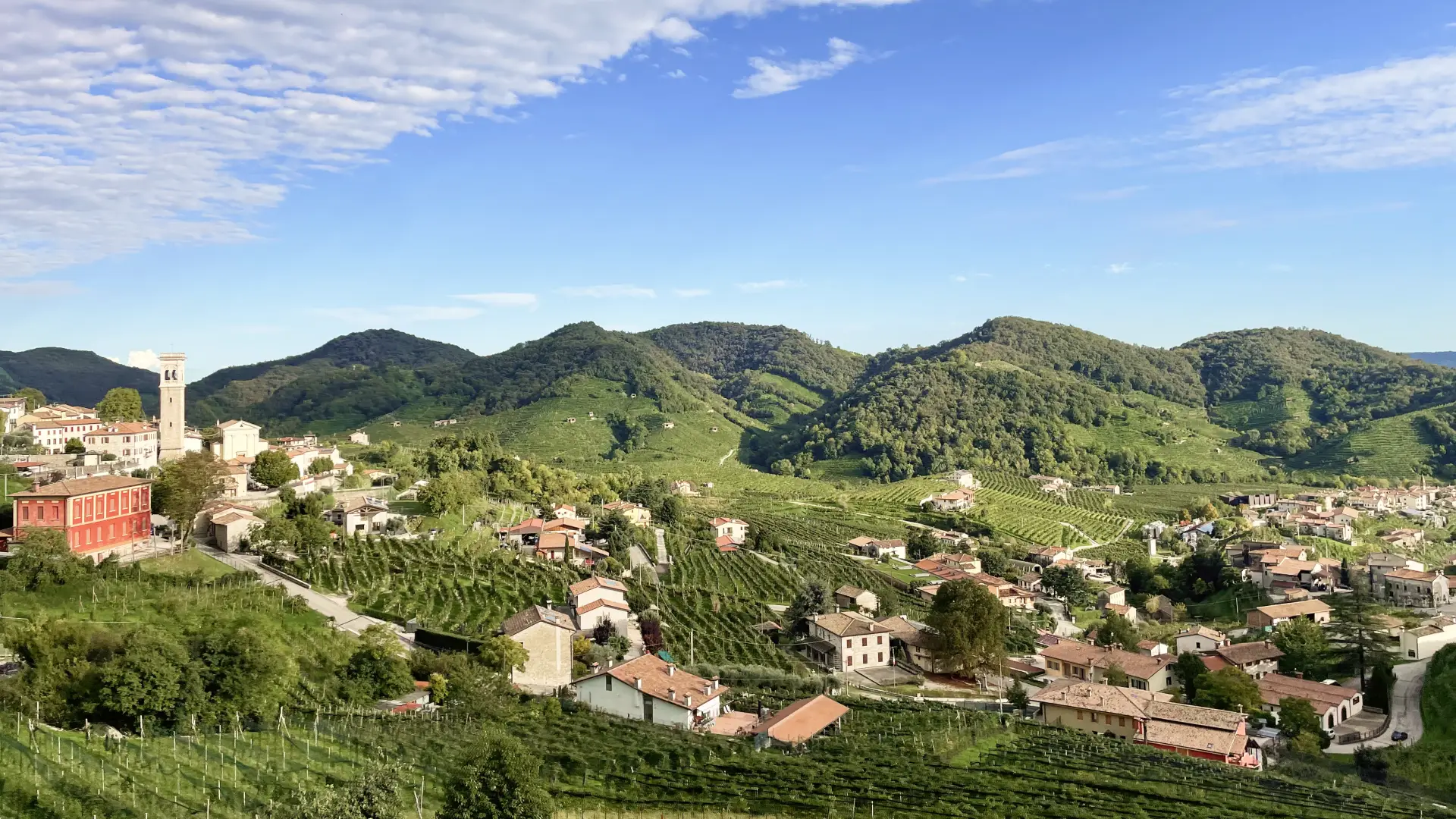
Everyone knows Prosecco. Few understand it or know where it really comes to life. Forget bottom-shelf bubbles and mass-market fizz. The real story starts in the steep, sunlit hills between Conegliano and Valdobbiadene, where every vine is planted by hand and every bottle tells a story of tradition, landscape, and pride.
DOC vs DOCG: It’s Not Just Letters
Prosecco is often thrown into a single sparkling bucket but there’s a world of difference between DOC and DOCG.
DOC Prosecco can be made in a broad, flat zone that includes parts of Veneto and Friuli. It’s large-scale, machine-harvested, and — let’s be honest — designed for volume. Good for a Spritz, perhaps, where the Aperol (or the Campari — what’s your pick?) can hide the lack of character.
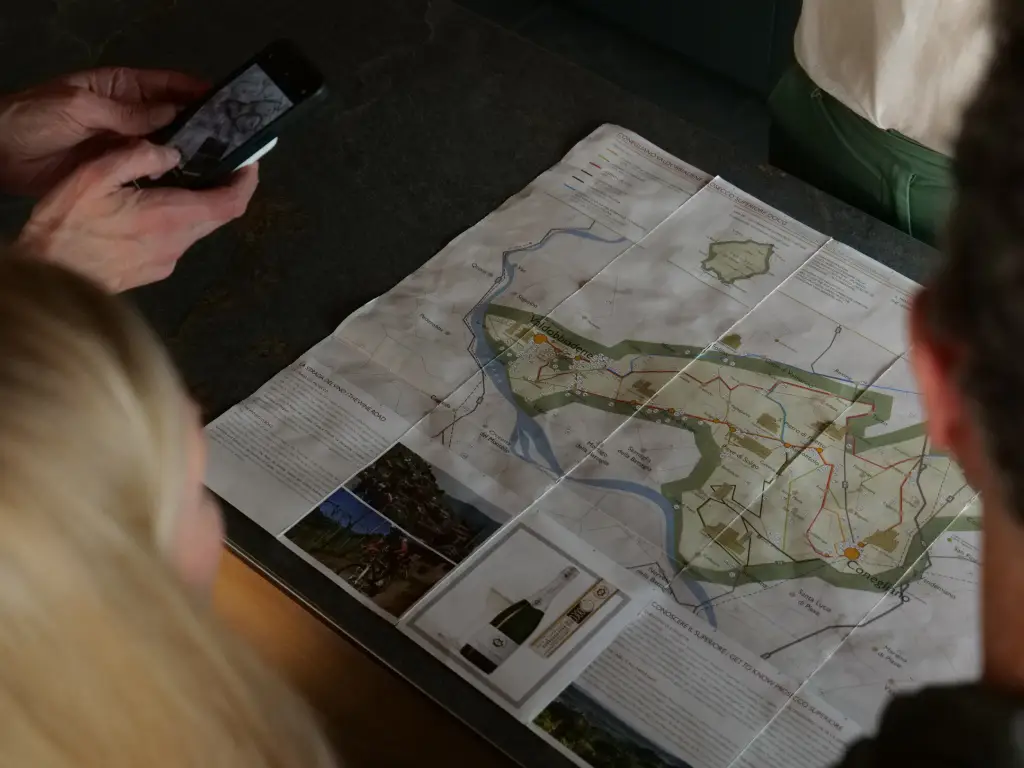
DOCG Prosecco, on the other hand, comes from the steep hills of Conegliano Valdobbiadene — just 15 small villages where vine-growing has been a way of life for centuries. The result is a landscape so unique it has been recognized as a UNESCO World Heritage Site, and a wine culture where quality has always come before quantity.
If you’re looking for real character, this is where to start.
Look for “Conegliano Valdobbiadene Prosecco Superiore DOCG” on the label. Even better: seek out wines from a Rive (a single hillside vineyard) or the prestigious Cartizze subzone, a tiny 107-hectare area often referred to as the Grand Cru of Prosecco.
Our Favourite Winery
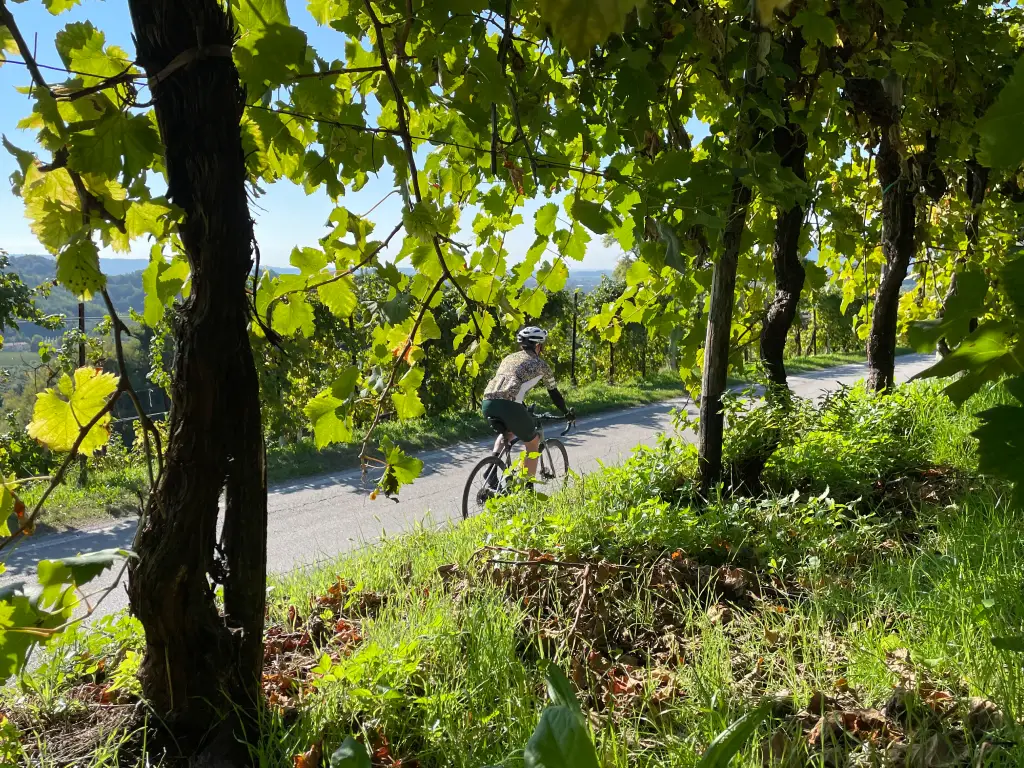
The hard work of hundreds of viticulturists has created a mosaic of small vineyard plots and postcard-perfect hamlets, all connected by roads that seem tailor-made for cycling. And as if that weren’t enough, at almost every turn there’s a winery offering tastings.
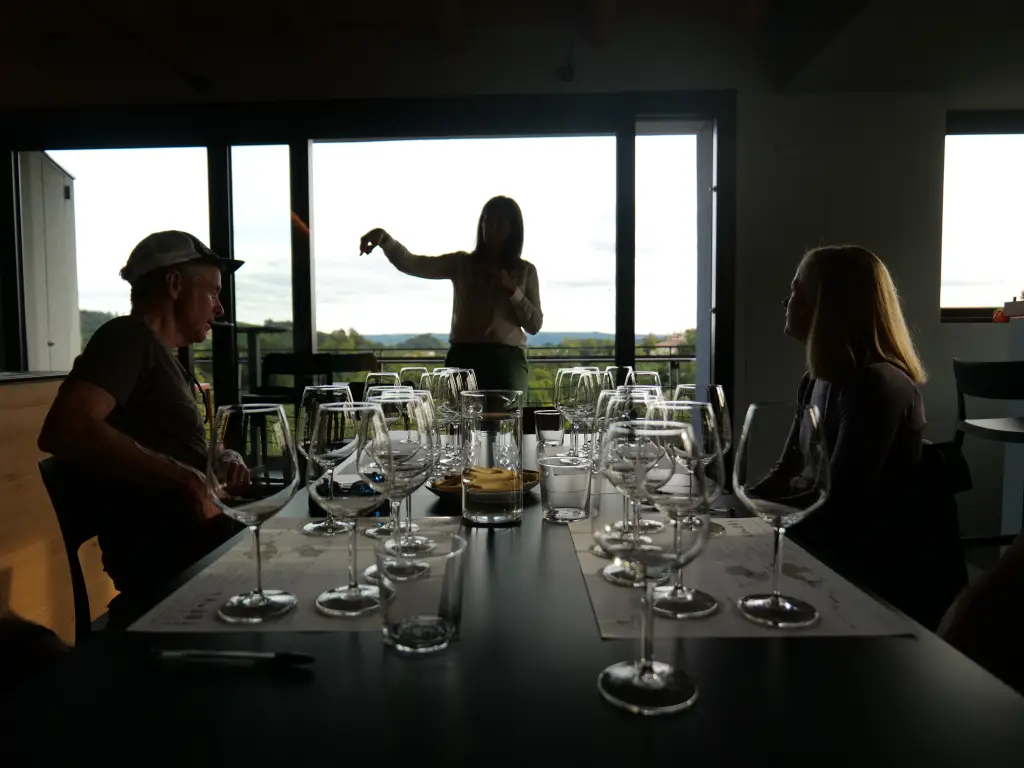
Scouting them (almost) all was a tough job, but after many glasses, we found our favorite. The one we always come back to when riding in the area: Azienda Agricola Bastia run by winemaker Michele Rebuli.
Perched in Saccol, in the heart of the DOCG zone, Bastia is everything we admire in a winery: passion, tradition, pride, and hard-working people. Tania and Michele welcome visitors with a warm smile and a genuine desire to share the fruits of their labor. Their Prosecco is honest, clean, and expressive: a pure reflection of the land and the family behind it.
More Than Just Bubbles
While Prosecco is their signature wine, Bastia doesn’t stop there.
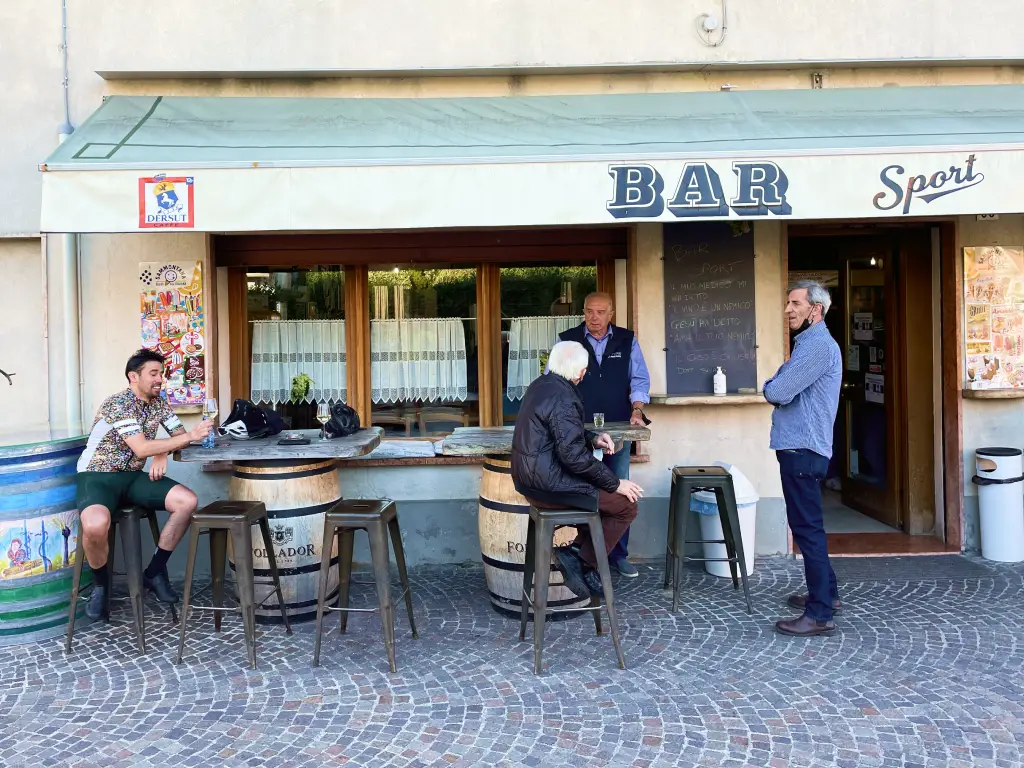
To honor the deeper roots of Valdobbiadene tradition, they also craft a few lesser-known, quietly bold wines: a still versions of Glera (the grape behind Prosecco) that recall the local ombra once poured in every village osteria, and a bottle-fermented wine that revive the rustic soul of vin col fondo. These wines aren’t made to follow trends or chase scores. They’re made to tell the whole story of this land: one that’s honest, unfiltered, and proudly tied to tradition.
Did You Know? What “Ombra” Really Means
In the Veneto region, a small glass of still wine is often called an “ombra”, which literally means shadow in Italian.
The name dates back to old Venice, where wine sellers in Piazza San Marco would follow the shade of the bell tower, moving their carts to keep the wine cool. People would say: “Andémo a béver un’ombra” — “Let’s go drink a shadow” and over time, ombra became shorthand for a humble, everyday glass of local wine.
Curious to discover the real Prosecco?
We’ll ride the hills, toast the views, and stop at Bastia for a glass that says it all.
Discover our Veneto bike tours and let’s plan your ride.